The novel

TRES SILENCIOS

Three men. Three missions. Three silences.

Start reading

One chapter a week.

01

THE NOVEL

Tres Silencios poster

The story that changes everything

Madrid, 2001. Three men have a mission. What they don't know is the price they'll have to pay.

"This novel is for men looking to take the first step toward being free.
And for everyone who knows them and loves them, no conditions."— Edgar Rodríguez

Premieres · Nov 19

Share WhatsApp X Telegram

02

CHARACTERS

Ethan

ETHAN

Spy

He falls asleep in a minute. He always wakes up alone.

Alejandro

ALEJANDRO

Agent

Seville has a color all its own. His life is in black and white.

Petrov

PETROV

Hitman

He died in ninety-two. He's been cold ever since.

03

CITIES

2001

MADRID

1992

MOSCOW

04

THE SPOTS

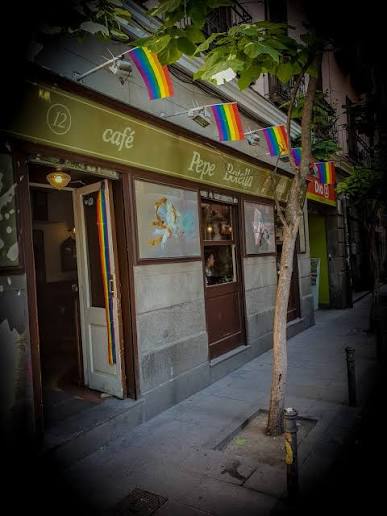
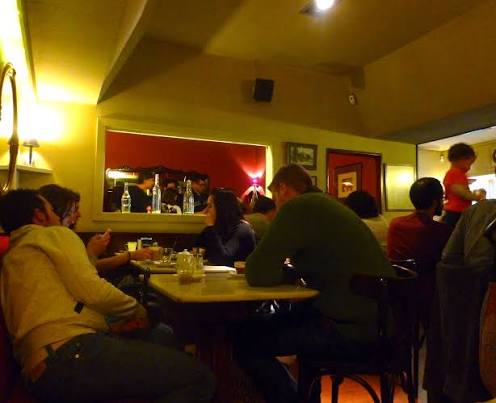
Alejandro at Café Pepe Botella

EL PEPE BOTELLA

Malasaña, Madrid · T1·E01

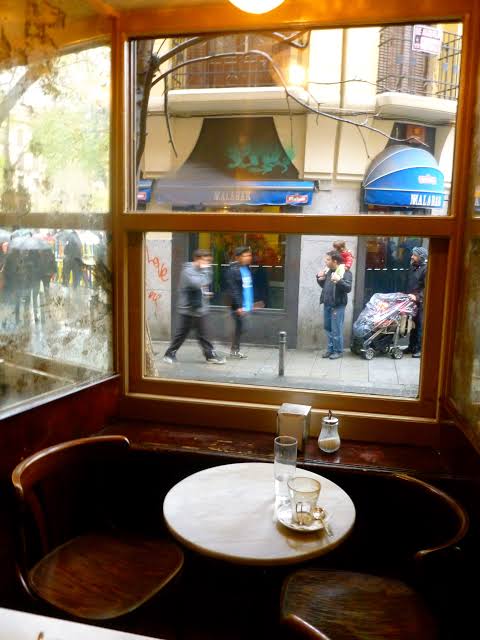
"…a bar with a terrace of metal tables that breathed like an old man, heavy with memory. It was small, intimate, with round wood-and-marble tables inside, their gray veins seeming to tell stories of long nights few remembered."
The origin

The name is a joke that's almost two centuries late. Pepe Botella is what the people of Madrid, somewhere between contempt and mockery, called Joseph I Bonaparte, the French king Napoleon foisted on Spain, accused of minding the wine cellar more than the throne. A bar carrying his nickname wouldn't be funny on just any corner; it's funny here, because the Plaza del Dos de Mayo is exactly where Madrid rose up in 1808 — where Daoíz and Velarde died defending the Monteleón artillery barracks, of which only the arch remains, and where a girl from the neighborhood, Manuela Malasaña, gave her name to everything around it. An imposed king, with a borrowed name, presiding over the square that rebelled against him. Few places sum up better a story of men who aren't called what they say. And there it still is, its terrace facing the square as if nobody had told it the century had changed.

The legend

The rest, the neighborhood supplied. Malasaña was the cradle of the Movida, and when the noise died down the cafés were what remained; this was one of the ones that stayed. The posters on the walls aren't decoration: they're the family tree of the place — the Spanish cinema that was conquering the world back then, Almodóvar's and Bigas Luna's, and the one hard on their heels, Amenábar shooting ghosts and Medem filming desire without asking permission. Across that terrace passed screenwriters still wearing their hangovers, actors before they were anybody, and directors shouting over a shot that never got filmed; they say more than one movie was closed there on a napkin, and some other one sank at the same table. Everybody was, always, somebody about to be. In this novel it's also where three silences crossed paths for the first time — but that's told elsewhere.

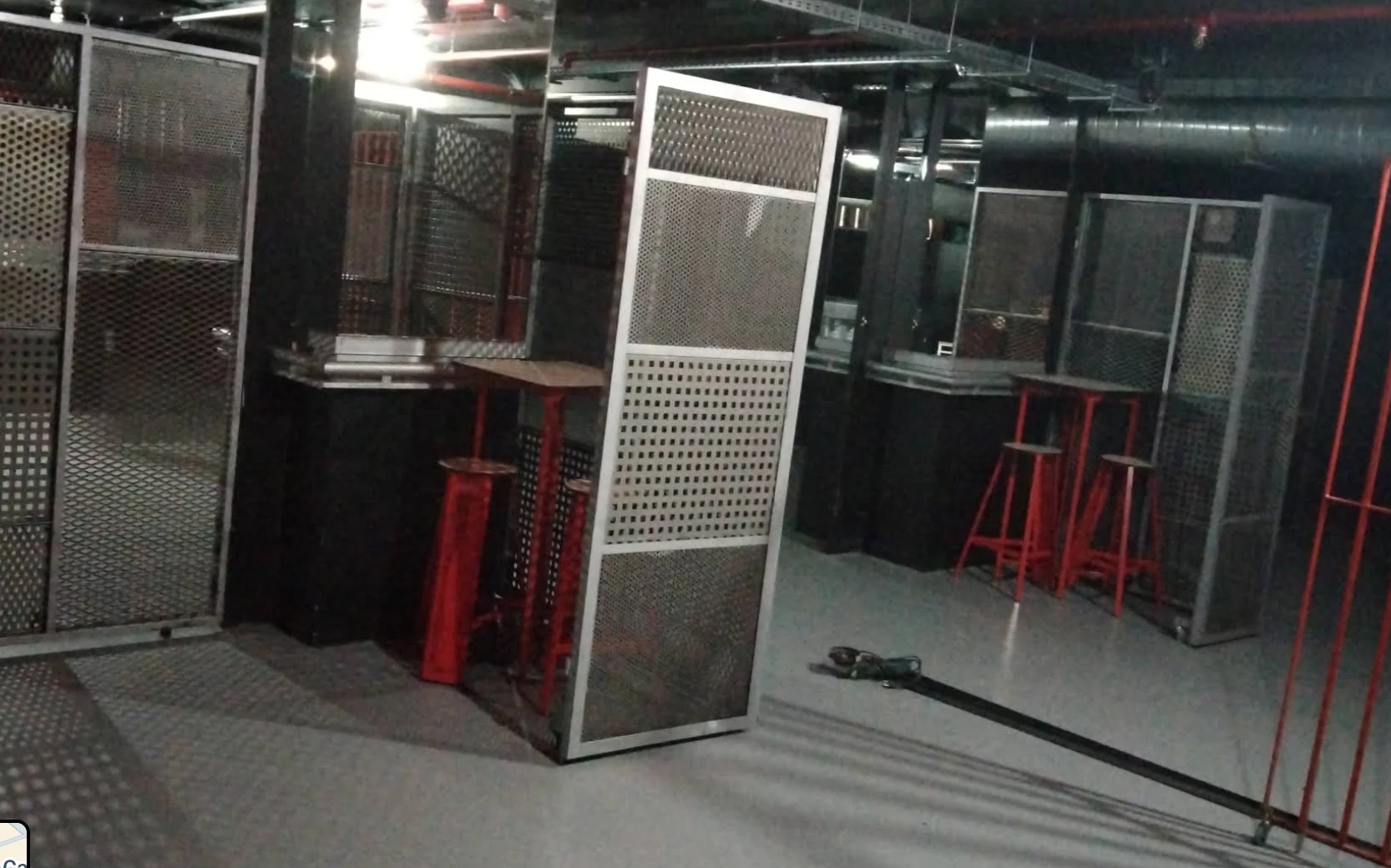
Petrov going down the stairs at the Strong

THE STRONG

Ópera, Madrid · T1·E01

"A place nobody ever admitted to having been. A curtain, a red light, and a man on a stool who took your money without looking you in the face. […] He had just walked into the biggest darkroom in Europe."

The origin

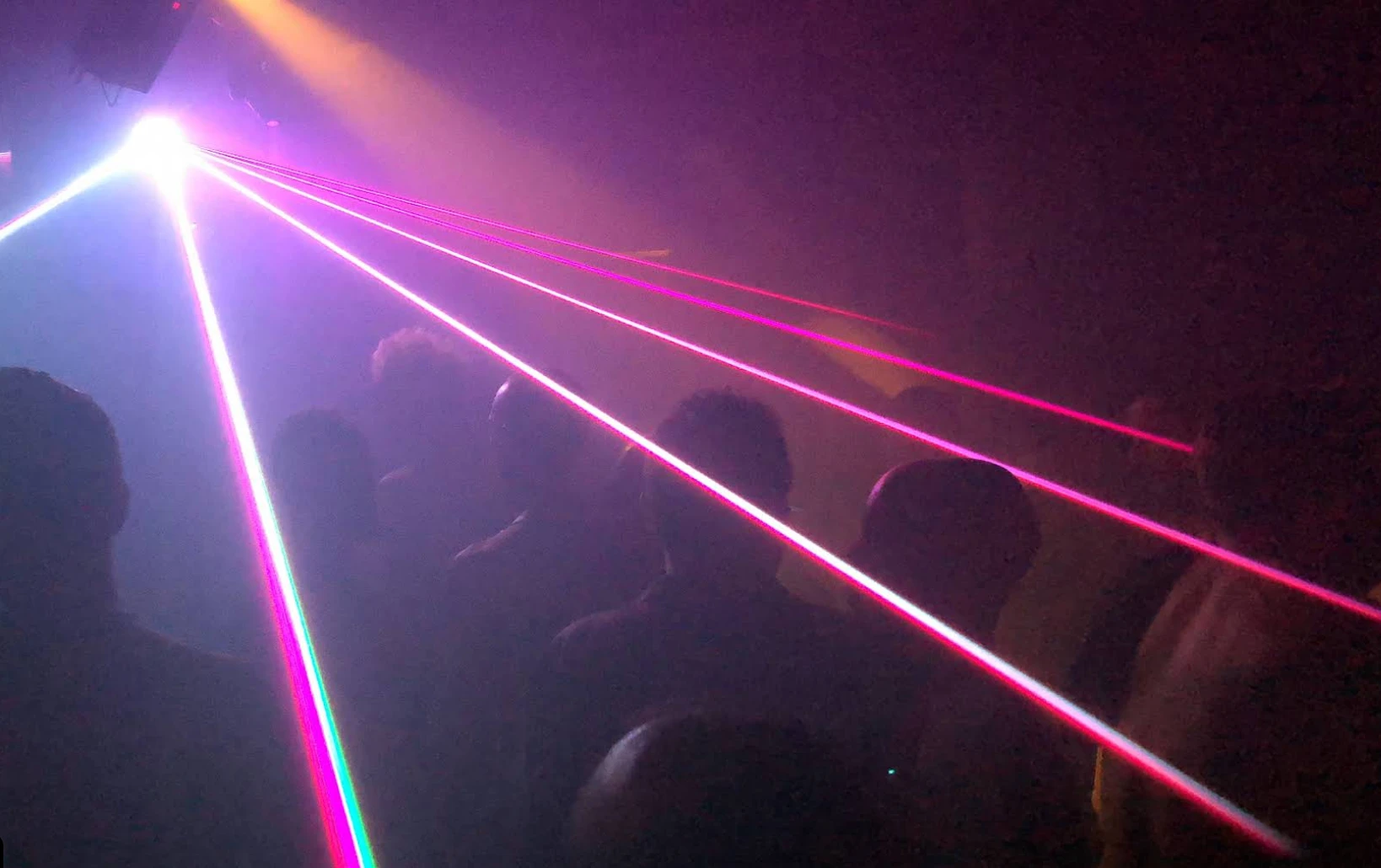
The Strong exists. It opens in the early nineties — 1992 or 1993, depending on who's telling it — in a basement between Callao and the Opera, five minutes from Chueca, in a Madrid where being gay was still something you practiced under your breath. It isn't born as a bar: it's born as a place you go down to. A curtain, a man on a stool, a curved staircase painted black, and below it what almost nobody dared to name back then and today has a name of its own: the Labyrinth, the darkroom a magazine once called the biggest in Europe. Thirty years on it still opens every night, eleven to six, and the staircase still curves on the way down.

The legend

Nobody admits to having been, and everybody knows where it is. That's its rule and its contract: what happens downstairs doesn't climb the stairs. For several generations of men the Strong is a rite of passage — the first basement, the first time you let yourself be looked at without having to explain — and for the city it's the last open secret that survived everything: the decade that saw it born, the epidemic, gentrification, and the apps that promised to make it unnecessary. In 2001, when this novel takes place, it charges a thousand pesetas at the door, and down its staircase goes Petrov, slowly, knowing what he's willing to have done to him. But that's told elsewhere.

Ethan in a Madrid café

05

A NOTE FROM THE AUTHOR

"This novel isn't about me,
it's built out of several of my lives."

I didn't hold myself inside one character. I split myself in three. To one I gave the addiction and the way out. To another, a gifted mind that never stops, hostage to ADHD, and the fear that they'd stop loving him if they really knew him. And to the third, the rituals that put the world in order when the world shakes and crumbles under your feet, when you lose control, even if control itself is an illusion.

To the reader watching from the bar I gave my eyes: "I went down those stairs a thousand nights, toward the basements of the forbidden, and lived to tell it." Many didn't live. That's the first debt I owe to fate, and I pay it with this story.

That's why the threesome isn't a fantasy or a provocation. It's a man making peace with all his pieces, his gears, his fears and his shames. The controller learning to live without fear. The addict discovering that under the anesthesia there was someone worth loving and admiring. The used one finding out that you can be, if you give yourself permission.

There's a house by the sea. If they reach it, it will be because I got there first. It's the place I built on paper so that everyone I've been can live together, and feel at home with themselves, exemplary, and loved by me. In the first person, singular.

I write for the men who spend their lives living lives designed by others. By a community, by a family, by a drug, by fear. Victims of the need to please the people around them, applauded for exactly what keeps them in a cage. Under that designed life there's someone genuine trying to get out.

There is. He doesn't come out whole, and he doesn't come out on a Tuesday… he comes out one day after another, with no epic, in front of witnesses who don't leave. Healing isn't perfection. It's constancy. Healing is like a profession: it works if you go every day, and show up on time, and do the work… no excuses, no exceptions.

This novel is for men looking to take the first step toward being free. And for everyone who knows them and loves them, no conditions.

I've been luckier than I'll ever be able to repay. This book is my way of giving it back. A map of the desert you have to cross alone, with the faith that there'll be water on the other side. And I leave it here, the map in full detail, loaded with the pain it takes to beat yourself and find yourself, for all of you who are out of water.

I want it known that it can be done.

That it doesn't matter how you got to your present. The future you can build however you want, starting today, by making decisions that are yours and yours alone.

YOU OWN YOUR SILENCE.

Edgar Rodríguez

06

READ

18+ · Adult fiction

Read in immersive mode, one screen at a time.

Premieres · Nov 19